

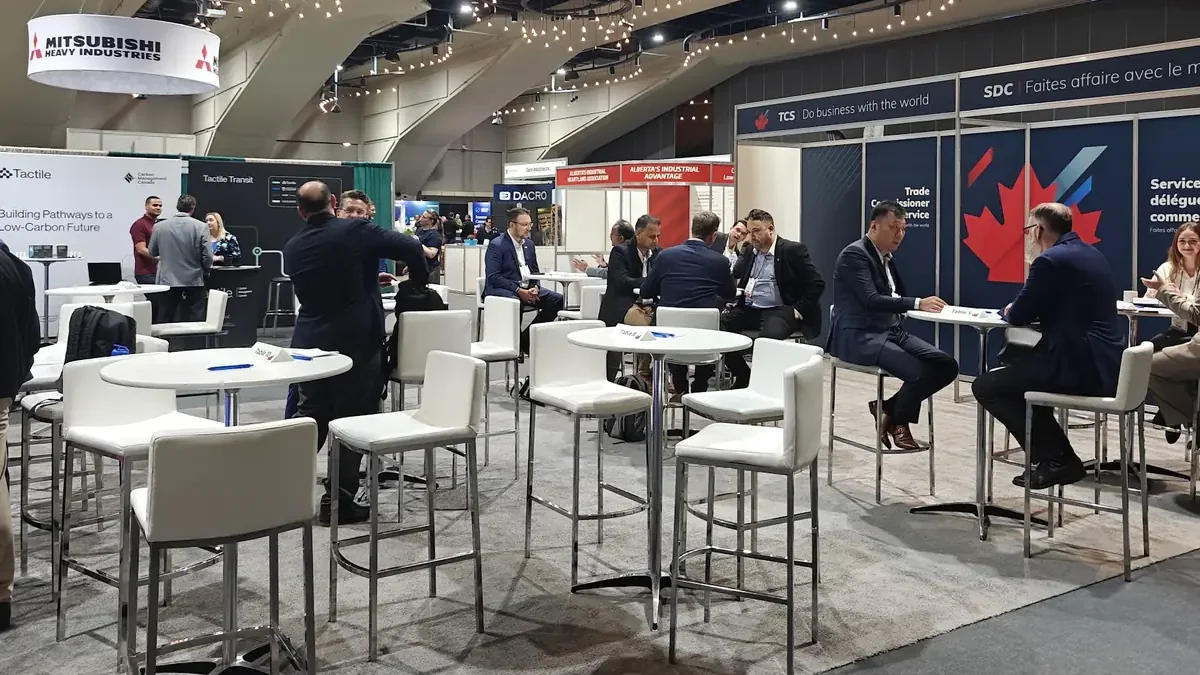
Speed networking and AI matchmaking solve different problems. Speed networking gets a room talking fast and helps people discover contacts they would never have searched for. AI matchmaking gets each attendee in front of the specific people worth their time. Most events need both, and with Moostoo you can run them as two blocks of the same program.
Key Takeaways
- Speed networking is quantity first: lots of short conversations, plenty of energy, and some that go nowhere.
- AI matchmaking is relevance first: Moostoo pairs one attendee’s Seeks with another’s Offers, never matches colleagues, and only suggests people they can actually book.
- In Moostoo both formats run on meeting sessions: short back-to-back slots at numbered tables for speed rounds, longer slots for matched 1:1 meetings.
- The networking window closes with the event, so plan both formats inside the event days.
- The post-event report shows meetings per time slot, so you can see which block actually produced meetings.
What is speed networking?
Speed networking is a fast-paced event format where attendees meet in short, timed one-to-one conversations, then move on to the next person when the round ends. In twenty minutes someone can meet four or five people. It has been around for years, and for good reason. It is:
- Fast and social. Attendees meet several people in a short time.
- Energy boosting. It creates buzz and momentum, especially early in an event when people don’t know anyone yet.
- Good for discovery. It’s a great way to meet people you wouldn’t have been matched with otherwise.
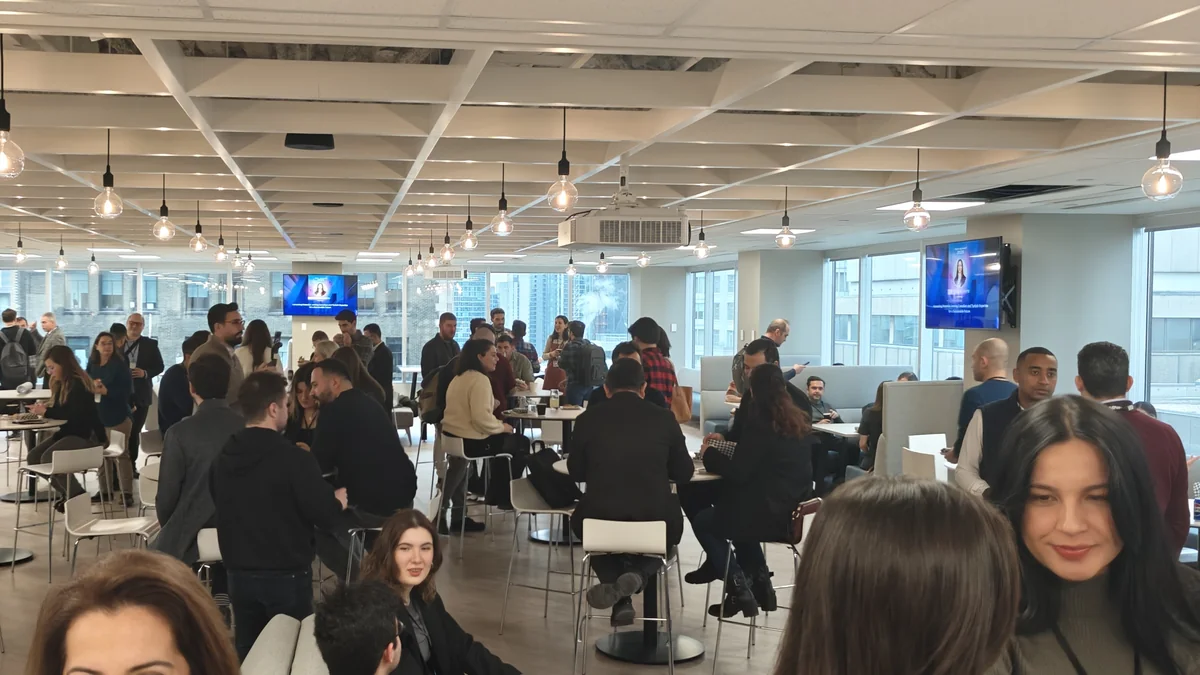
The downside? Speed networking is quantity over quality. You’ll meet many people, but not all of them will be relevant, and the person you most needed to meet may be at the other end of the room when the bell rings.
What is AI matchmaking?
AI matchmaking uses what attendees say about themselves to suggest who they should meet, then lets them book that meeting. In Moostoo, the matching starts from needs: one person’s Seeks against another’s Offers, in both directions, and then the rest of their profile and company data. With Moostoo’s AI matchmaking, you get:
- Needs-based matches. An investor looking for seed-stage startups is matched with founders who offer exactly that, not with everyone who ticked “investing”.
- No wasted pairings. Colleagues are never matched (same company, same booth or same company web domain), and two people who offer the same thing are treated as competitors rather than a match.
- Only people you can actually meet. Someone you can’t book, because no meeting session is open to both of your attendee types, is ranked lower and never shows up among your ten People to meet.
- A reason with every match. Each suggestion carries a score and a short explanation, and anyone scoring 50 or more is badged Recommended in the directory.
- Trackable results. Meetings booked, completed and missed show up in the event’s analytics.
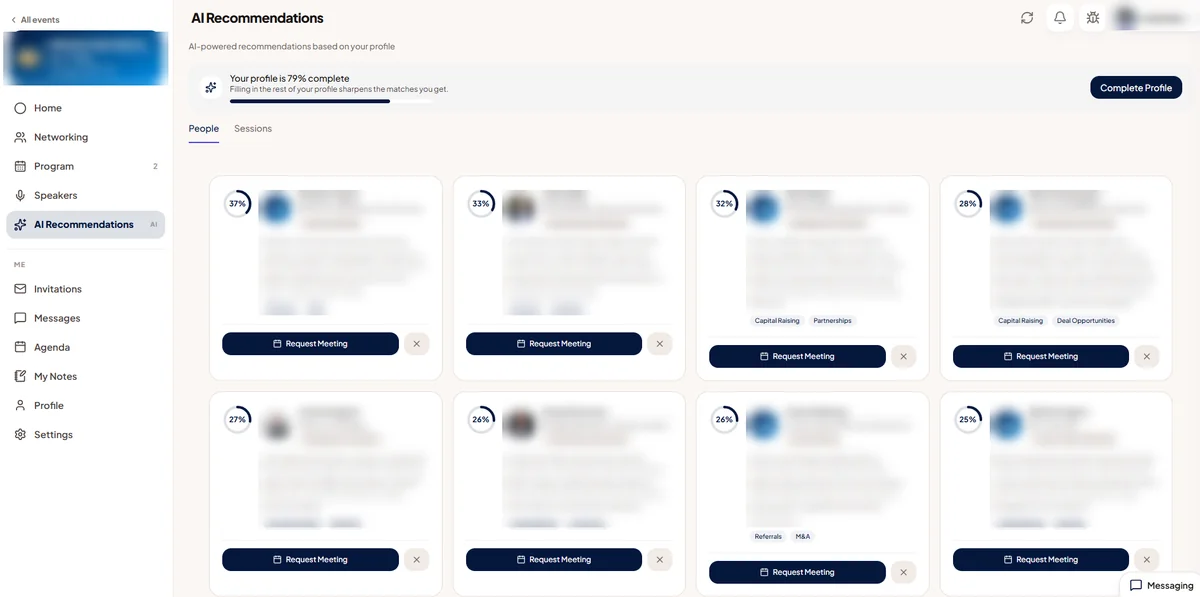
The downside? AI matchmaking focuses on relevance, so it doesn’t give you the same fast-paced social vibe. It also depends on profiles: someone who leaves theirs empty still gets suggestions but isn’t suggested to anyone else. For how the matching works in more depth, see why AI event matchmaking outperforms traditional networking.
How do speed networking and AI matchmaking compare?
The two formats trade breadth for depth. Speed networking maximizes the number of conversations and the energy in the room; AI matchmaking maximizes the chance that each conversation matters to both people. Here is how they line up side by side.
| Speed Networking | AI Matchmaking |
|---|---|
| Creates energy and buzz | Creates focused, high-value connections |
| Attendees meet many people quickly | Attendees meet the right people |
| Great for icebreakers and social mixing | Great for sales, investment and partnership meetings |
| Pairings are random or by table | Pairings come from Offers, Seeks and profile data |
| Ends when the timer does | Ends when the meeting slot does, with a record of who met whom |
How do you run speed networking in Moostoo?
You run it as a meeting session with short, back-to-back slots. A meeting session is a block of time that Moostoo cuts into bookable slots and seats at tables. Each slot can be anywhere from 1 to 120 minutes, and the break between slots can be zero. A 10:00–12:00 block with 15-minute slots and a 5-minute break gives six rounds per table.
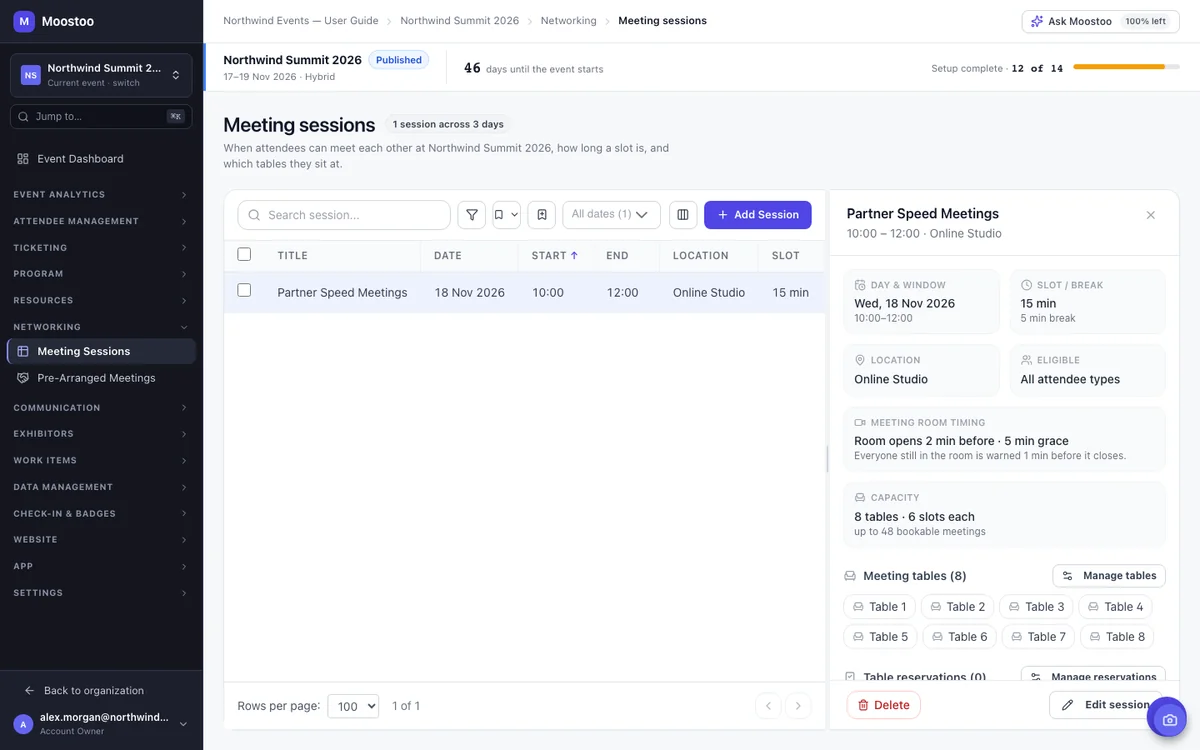
A few settings turn that into a speed round:
- Tables. Add a numbered series (Table 1 to Table 30) in one step. Each table hosts one meeting per slot, so tables times slots is the most meetings the round can hold. Name the tables to match the signs in the room, because attendees walk to the name they read in the app.
- Who takes part. Pick the eligible attendee types, for example only Startup Founders and Investors, so a speed round for one audience doesn’t fill up with everyone else.
- Who sits where. Reserve a table for a VIP or a headline sponsor’s representatives (by name) so their slots are never taken by someone else.
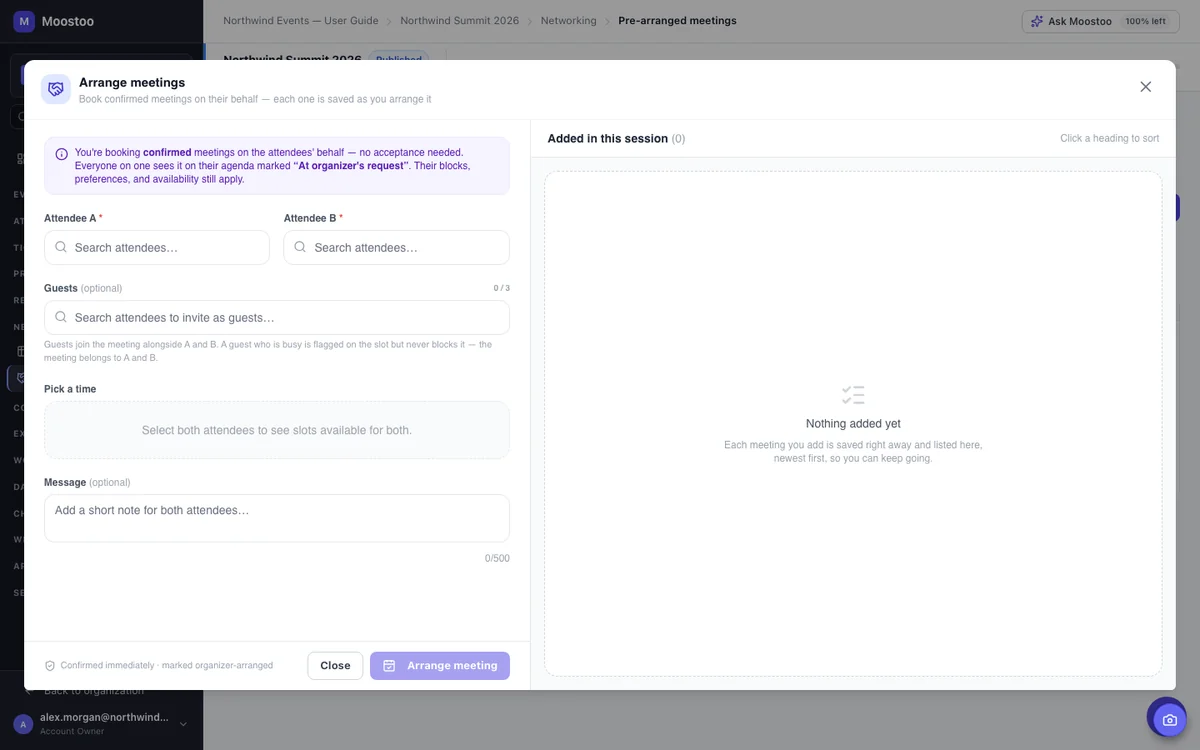
- Who meets whom. Let attendees book their own rounds, or build the schedule yourself from Networking → Pre-Arranged Meetings. Keep one attendee fixed and work down their list, and each confirmed meeting lands on both agendas with its table.
Setting it up doesn’t have to be manual either. Ask Moostoo, the assistant in the admin app, can create the session and its tables from one sentence, such as “Create a meeting session called Investor Office Hours with 20-minute slots and 5-minute breaks, open to Investor and Startup Founder, with 15 numbered tables.” It asks you to confirm before anything is changed.
One honest note: the classic mixer, where the whole room shifts one seat when a bell rings, is run on the floor with a timer. Moostoo’s version is a series of short, booked one-to-one meetings, each with a time and a table, which is also what makes it measurable afterwards.
Why run both at the same event?
Because they work at different moments. Speed rounds are best early, when people don’t know anyone and need a reason to start talking. Matched meetings are best once profiles are filled in and attendees know what they are looking for. With Moostoo, you can:
- Start your event with a speed networking session to energize attendees and break the ice.
- Follow up with AI-matched 1:1 meetings in a second meeting session, so everyone gets time with the connections that matter most.
The two blocks are two meeting sessions, each with its own slot length, tables and eligible types. Add as many as you need, one per day or one per pairing. The combination delivers both energy and outcomes.
Plan both inside the event days. Meeting requests are only offered while a meeting session is still to come, and AI recommendations stop refreshing once the event has ended, so a “we’ll match people afterwards” block never happens. If you need follow-up after the last session, that is a job for your post-event engagement plan.
What does it look like at a real event?
At the Five Star Conference in Dallas, attendees used AI matchmaking and 1:1 meeting scheduling in the event’s own iOS and Android app, and booked more than 500 meetings with each other across the four days. That is the kind of number you can only report when every meeting is a booking with a time and a place, rather than a conversation that happened somewhere in the crowd.
How do you know which format worked?
Compare the two blocks in the post-event report. The Networking tab of the post-event report shows total meetings, completion rate, meetings per person, connections made, and Meetings by Time Slot, which tells you whether the morning speed round or the afternoon matched block produced more meetings. A heatmap shows which attendee types actually connected with which.
During the event, live analytics shows scheduled, completed and missed meetings, and Hot Matches: the people most requested for meetings. If a speed round has a high no-show rate, shorten it or move it next time. And if you want to cap how many meetings one person can book, set a limit per attendee type in the experience rules.
Frequently Asked Questions
What is speed networking?
Speed networking is a fast-paced event format where attendees meet in short, timed one-to-one conversations and rotate to a new person each round, so they meet many people in a short time. It works best as an icebreaker, early in an event, when attendees don’t yet know who they should be talking to.
What is AI matchmaking?
AI matchmaking uses attendee profiles to suggest the most relevant people for each attendee’s goals. In Moostoo it matches one person’s Seeks against another’s Offers in both directions, adds profile answers and company data, never pairs colleagues, and only suggests people the attendee can actually book a meeting with.
Should I choose speed networking or AI matchmaking?
Most events do best with both. Speed networking creates energy and discovery; AI matchmaking makes sure the important meetings happen. In Moostoo they are two meeting sessions in the same event, one with short back-to-back slots and one for matched 1:1 meetings.
How long should a speed networking round be?
Long enough for a real introduction, usually 5 to 15 minutes. In Moostoo a meeting slot can be anywhere from 1 to 120 minutes. For in-person rounds, leave a short break, around 5 minutes, so people can find their next table.
Can I run speed networking at a virtual or hybrid event?
Yes. If a meeting session’s location is a Virtual Room, or the event is online, every meeting in it becomes a video meeting with its own room. For back-to-back virtual rounds, keep the room opening at or under the break between slots so one meeting doesn’t run into the next.
Want to see how a speed round and matched meetings look in one program? Book a Moostoo demo.
Ready to boost your engagement?
Make your next event unforgettable with AI-powered attendee engagement.
